





The double-edged sword of Testosterone: Balancing TRT, Fertility, and the "Sperm maxxing" trend
Scroll through almost any social media platform today, and you will find a highly visible, hyper-focused movement dedicated to optimising male biology. From "sperm maxxing" (the viral trend of trying to maximise semen volume, sperm quality, and overall reproductive power) to "biohacking" physical performance (using science, data, technology, and targeted lifestyle interventions to improve strength, endurance, speed, recovery, mobility, and overall athletic performance), men are paying closer attention to their reproductive health than ever before. In many ways, this is a positive shift. For too long, fertility was viewed primarily as a female concern, leaving men out of the conversation.
But this sudden obsession with peak masculinity has a dark, highly ironic twist.
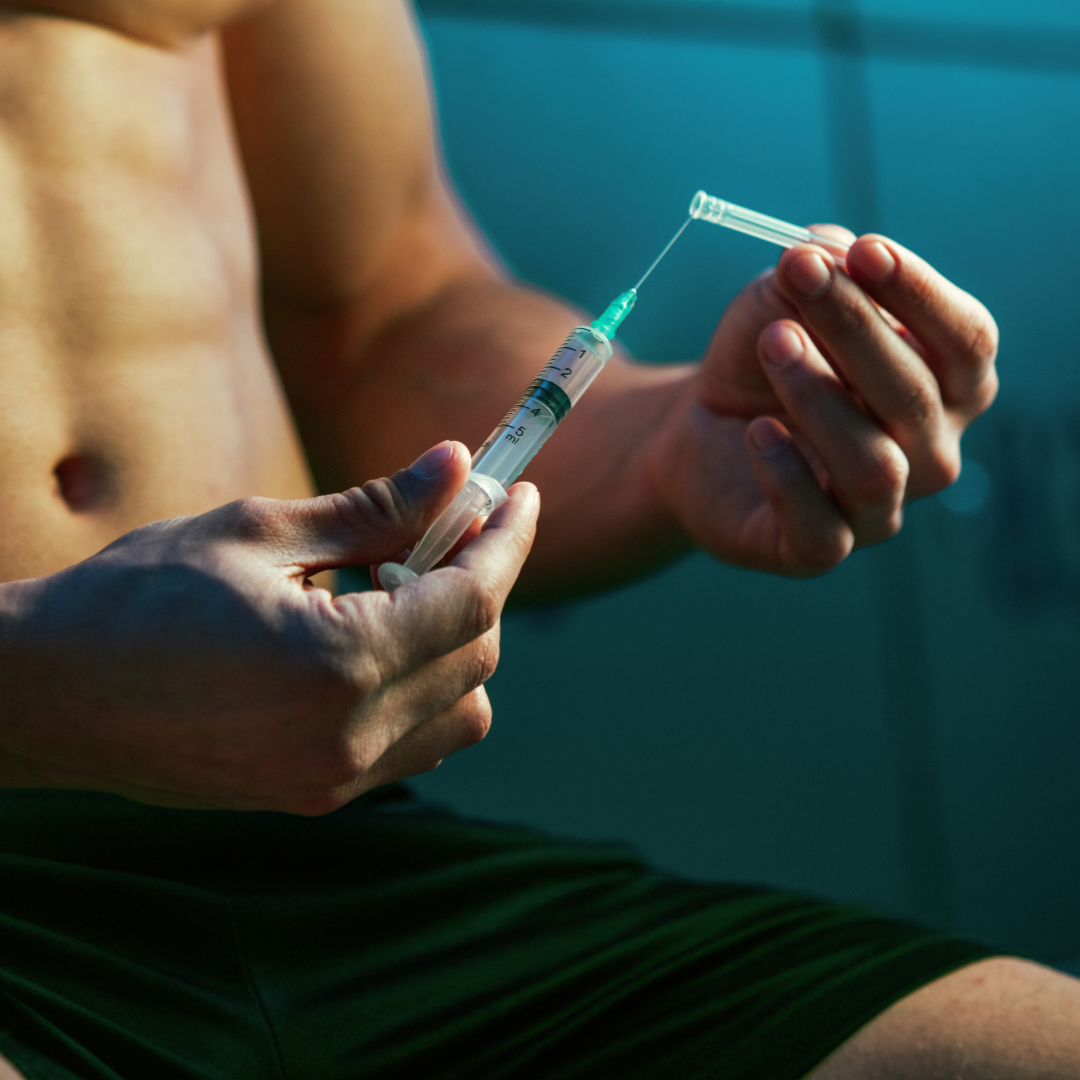
While chasing the ultimate versions of physical strength, endless energy, and reproductive prowess, a rapidly growing number of men are turning to Testosterone Replacement Therapy (TRT) or unregulated, self-prescribed testosterone bought online and in gyms. What many of these men do not realise is that taking synthetic testosterone is actually one of the fastest, most effective ways to completely switch off their fertility.
To understand why, we have to look at the elegant, highly sensitive feedback system that controls the male reproductive system.
The Brain-Testis regulator: How your hormones work
To understand how testosterone affects fertility, we have to look at the Hypothalamic-Pituitary-Gonadal (HPG) axis. Think of this system as a biological feedback system that regulates both testosterone and sperm production:
The Hypothalamus: Located in your brain, it monitors hormone levels. When it detects that testosterone is low, it releases a messenger called GnRH (Gonadotropin-Releasing Hormone).
The Pituitary Gland: The pituitary is located just below your brain and when triggered by GnRH, this gland releases two vital signalling hormones into the bloodstream: LH (Luteinising Hormone), which travels to the testes to tell specialised cells (Leydig cells) to produce natural testosterone, and FSH (Follicle-Stimulating Hormone), which signals the testes to start creating sperm.
The Testes: They receive these signals, producing both the testosterone required for your body and the sperm required for fertility.
This is a negative feedback loop. Just like a home thermostat shuts off the heating once the room reaches a set temperature, your brain shuts off the release of GnRH, LH, and FSH the moment it senses there is plenty of testosterone circulating in your blood.
The great irony: TRT as male contraception
When a man introduces external (exogenous) testosterone into his body whether through medical injections, skin gels, or black-market steroids the brain, along with the hypothalamus and pituitary, registers a massive spike. It assumes the body has more than enough testosterone, so the secretion of GnRH, LH and FSH is instantly cut off.
The biological shutdown that follows is rapid and severe. Studies show that between 70% and 90% of men on standard TRT will develop severely reduced sperm counts (oligozoospermia) or a complete absence of sperm in their semen (azoospermia) within just 3 to 6 months of starting treatment (World Health Organization Task Force on Methods for the Regulation of Male Fertility, 1990; Handelsman et al., 1995; Patel et al., 2019).
Without LH, the testes completely stop producing their own localised, internal testosterone. This is a massive blow to fertility, because the concentration of testosterone inside the testicles needs to be up to 100 times higher than the concentration in your bloodstream to successfully manufacture sperm (Jarow & Zirkin, 2005; Sidhom et al., 2022).
Without adequate FSH stimulation, sperm production is markedly reduced, and the testes commonly shrink because the Sertoli cells and seminiferous tubules are no longer fully supported. This process is known as testicular atrophy (Oduwole et al., 2018).
The modern masculinity trap: Normal life vs. clinically low "T"
So, why are so many young, otherwise healthy men putting their fertility at risk?
Much of it comes down to the aggressive "medicalisation of masculinity" online. Social media feeds are saturated with lifestyle content claiming that a "real man" should have boundless energy, hyper-productivity, zero body fat, and an insatiable sex drive at all hours of the day.
This has led to the pathologizing of entirely normal human experiences. Experiencing a dip in your sex drive, feeling tired after a gruelling 50-hour workweek, or struggling to build muscle are suddenly framed as "hormonal crises" that require immediate chemical intervention. In reality, these fluctuations are often just your body reacting to modern life, poor sleep, high stress, a sedentary lifestyle, or nutritional deficiencies.
True hypogonadism is a diagnosed medical condition, not a lifestyle phase. It requires a doctor to confirm consistently low testosterone levels across multiple separate blood tests, alongside distinct clinical symptoms such as erectile dysfunction, loss of morning erections, and metabolic issues. TRT is a highly specific medical treatment for a medical disease; it is not a performance-enhancing shortcut for everyday fatigue.
Why clinical oversight is non-negotiable
If you suspect your testosterone levels are genuinely low, working with a qualified clinician is the only safe path forward.
Accurate diagnostic testing
To get a valid diagnosis, a doctor will require at least two separate morning blood tests, typically taken between 8:00 AM and 10:00 AM. This timing is critical because testosterone naturally peaks in the morning and fluctuates wildly throughout the day based on sleep and stress (Novaes et al., 2024). A clinician will run a comprehensive panel to check total testosterone, free testosterone, LH, FSH, and SHBG (Sex Hormone-Binding Globulin). In young men, "low T" is often secondary, meaning the testes are perfectly capable of working, but are being suppressed by something else such as severe sleep apnoea, obesity, or chronic stress. Addressing these root causes can naturally restore testosterone without medication.
Safeguarding your fertility
If TRT is truly required and you still want to have children, a clinician will not put you on standard testosterone therapy alone. Instead, they will utilise alternative medical protocols to keep your HPG axis active:
HCG (Human Chorionic Gonadotropin): This medication mimics the brain's LH signal, instructing your testes to keep producing their own localised testosterone and maintaining sperm production even while on TRT.
SERMs (selective estrogen receptor modulator; like Clomiphene): These trick the brain into producing more of its own GnRH, LH, and FSH, keeping the natural production line running.
Monitoring your vital signs
Testosterone therapy affects far more than just muscle and mood. A doctor will continuously monitor your red blood cell count (haematocrit) to ensure your blood does not become dangerously thick, protecting you from cardiovascular issues, strokes, and blood clots.
The dangers of unregulated "Gym TRT" and black-market hormones
Bypassing a doctor to self-prescribe testosterone or taking unregulated anabolic steroids bought online is incredibly dangerous.
First, there is the issue of unknown dosages and contamination. Black-market vials are frequently manufactured in underground labs without sterile controls, leaving them open to heavy metal contamination and bacteria. They are also often mislabelled, meaning you may be injecting massive, supraphysiological doses that shock your endocrine system.
Second, many men mistakenly view fertility like a light switch assuming they can take unregulated hormones now to get in shape and simply discontinue them for a couple of weeks when they want to have a baby.
The reality of the sperm recovery timeline is much more sobering:
The 74-Day Cycle: It takes roughly 74 days for a single cell to develop and mature into fully functional sperm.
The Recovery Lag: Once you stop taking external testosterone, your HPG axis doesn't reboot overnight. It typically takes 6 to 12 months (and sometimes up to 2 years) for sperm counts to return to baseline fertile levels.
The Risk of Permanent Damage: While most men do eventually recover their fertility, about 10% of men who engage in long-term or high-dose unregulated hormone use suffer permanent damage to their HPG axis, leaving them permanently infertile (Smit et al., 2021; Solanki et al., 2023).
Optimising the safe way: Evidence based fertility boosts
If you genuinely want to optimise your fertility and feel your best, you must not take unregulated hormones. True fertility optimisation is built on solid, lifestyle-driven science (Wright et al., 2014; Skoracka et al., 2020; Tesarik, 2025):
Manage your metabolic health: Excess body fat contains an enzyme called aromatase, which actively converts your natural testosterone into oestrogen. Staying active and maintaining a healthy weight keeps this in check.
Keep the factory cool: Sperm production requires an environment that is roughly 1 to 2 degrees Celsius cooler than your core body temperature. Avoid tight underwear, prolonged hot tub sessions, and resting hot laptops directly on your lap. Cool beans underwear is a great addition for men who are sitting for long periods or working in hot environments.
Fuel sperm production: Healthy sperm need a blend of key nutrients such as Zinc, CoQ10, Folate, and Omega-3 fatty acids. These provide the raw building blocks your body needs to build highly motile, healthy sperm.
Remove the Toxins: Smoking, heavy alcohol use, vaping, and recreational drug use have all been clinically proven to damage sperm DNA and lower overall counts.
The bottom line
Your hormone system is a beautifully balanced, self-regulating loop. Attempting to "hack" it with unregulated testosterone to meet an online aesthetic standard is highly likely to backfire, shutting down your natural fertility and leaving you medically dependent on external hormones.
If you are experiencing persistent symptoms of low energy or libido or have any concerns about your hormonal health and fertility, then consulting a qualified medical professional is paramount. True masculine health is about balance and longevity not a quick, unregulated fix.
References:
Handelsman DJ, Farley TM, Peregoudov A, Waites GM (1995); Factors in nonuniform induction of azoospermia by testosterone enanthate in normal men. World Health Organization Task Force on Methods for the Regulation of Male Fertility. Fertil Steril 63(1): 125-133
Jarow JP, Zirkin BR (2005); The androgen microenvironment of the human testis and hormonal control of spermatogenesis. Ann N Y Acad Sci 1061: 208-220
Novaes LF, Flores JM, Benfante N, Schofield E, Katz DJ, Nelson CJ, Mulhall JP (2024); Analysis of diurnal variation in serum testosterone levels in men with symptoms of testosterone deficiency. J Sex Med 21(5):408-413
Oduwole OO, Peltoketo H, Huhtaniemi IT (2018); Role of follicle-stimulating hormone in spermatogenesis. Front Endocrinol (Lausanne) 9: 763
Patel AS, Leong JY, Ramos L, Ramasamy R (2019); Testosterone is a contraceptive and should not be used in men who desire fertility. World J Mens Health 37(1): 45-54
Sidhom K, Panchendrabose K, Mann U, Patel (2022); An update on male infertility and intratesticular testosterone—insight into novel serum biomarkers. Int J Impot Res 34: 673-687
Skoracka K, Eder P, Lykowska-Szuber L, Dobrowolska A, Krela-Kazmierczak I (2020); Diet and nutritional factors in male (in)fertility-underestimated factors. J Clin Med 9: 1400
Smit DL, Buijs MM, de Hon O, den Heijer M, de Ronde W (2021); Disruption and recovery of testicular function during and after androgen abuse: the HAARLEM study. Hum Reprod 36(4): 880-890
Solanki P, Eu B, Smith J, Allan C, Lee K (2023); Physical, psychological and biochemical recovery from anabolic steroid-induced hypogonadism: a scoping review. Endocr Connect 12(12): e230358
Tesarik J (2025); Lifestyle and Environmental Factors Affecting Male Fertility, Individual Predisposition, Prevention, and Intervention. Int J Mol Sci 26(6): 2797
World Health Organization Task Force on Methods for the Regulation of Male Fertility (1990); Contraceptive efficacy of testosterone-induced azoospermia in normal men. Fertil Steril 65(4): 821-829
Wright C, Milne S, Leeson H (2014); Sperm DNA damage caused by oxidative stress: modifiable clinical, lifestyle and nutritional factors in male infertility. Reprod Biomed Online 28: 684-703